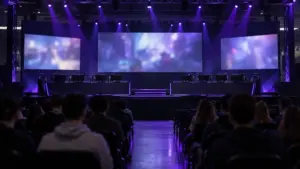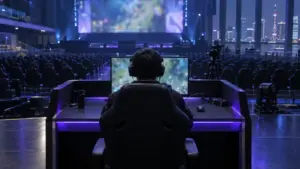


VALORANT Champions Tour Pacific has long positioned itself as a stage designed to unite talent from South Korea, Japan, Southeast Asia, Oceania, and more under one competitive banner. Hosted primarily in South Korea and featuring a mix of partnered and Tier 2 organizations, the league has produced international contenders while building passionate fanbases across the region.
But as the league has grown, multiple factors have forced teams, fans, and, ultimately, Riot Games to ask, especially in 2026, whether VCT Pacific is truly representing the region, or whether it is becoming an extension of the Korean VALORANT ecosystem.
Built on diversity, struggling with balance
Ever since the introduction of the International Leagues, VCT Pacific has been a complicated league to manage.
Unlike the Americas or EMEA, the Pacific is not a single competitive ecosystem. Instead, it brings together multiple regions, each with vastly different esports infrastructures, player bases, languages, and levels of investment.
While that diversity is also what makes VCT Pacific so interesting, it has created multiple challenges for the ecosystem. One of the biggest is the difficulty of making the league truly inclusive for all the regions involved.
Even Jake Sin, Head of VCT Pacific, has publicly acknowledged the issue, saying that “we’ve admittedly created an unintentional imbalance over the last few years.”
He explained that prioritizing operational stability contributed to this imbalance and that his goal moving forward is to address the issue during the upcoming partnership cycle.
“Reading all the reflections from players on their last four years in Pacific as they end their runs in 2026 really hits different. I hope they all see this as the beginning of a new era, more than an end of one. I’m committed to creating an even more amazing ecosystem to be a part of in the coming years. You can look forward to it,” Sin tweeted.
“And for those worried, rest assured that I am committed to making it more inclusive than it ever was. We’ve admittedly created an unintentional imbalance over the last few years (in exchange for operational stability) that I will be on a mission to address.”
I believe Riot Games organizing 2026 Stage 1 Finals in Vietnam and 2025 Stage 1 Finals in Japan was part of an experiment designed to address this imbalance in the long run. While the publisher opting for Busan as the destination for the 2026 Stage 2 Finals was personally a disappointment to me, I hope the team takes VCT Pacific outside South Korea more often starting next year.
Is VCT Pacific becoming too Korea-centric?
As of 2026, five of VCT Pacific’s 12 teams are Korean, accounting for around 42% of the league. No, I am not saying there is anything inherently wrong with that number. If Korean organizations consistently qualify through the competitive system, they deserve their places.
However, external factors, such as VCT Pacific being hosted primarily in South Korea, provide Korean teams with a degree of familiarity when it comes to infrastructure, the broadcast environment and the overall competitive culture.
Of course, this does not mean Riot is deliberately favoring South Korean teams. It is extremely difficult to create perfectly equal conditions for every VCT Pacific team, particularly during the first partnership cycle when so many sub-regions are involved.
However, competitive integrity concerns have also contributed to the perception of an imbalance.
Multiple VCT Pacific members, including Maksim “Jemkin” Batorov and Hector “FrosT” Rosario, have previously raised concerns regarding alleged breaches of competitive integrity.
According to their claims (later confirmed by Riot), South Korean teams received special treatment during the 2026 Kickoff, including an incident in which T1 players were allowed to smoke in the toilets and another in which Gen.G’s Lakia wore his headset incorrectly, among other allegations.
The allegations forced Riot Games to conduct an internal investigation, which resulted in multiple players and teams receiving written warnings, although no punishments were issued.
Inclusivity matters for VCT Pacific’s future
Whether intentional or not, the imbalance is undoubtedly hurting the wider region. For teams representing other regions, it can become harder to navigate logistics and attract new talent. Fans in those countries also feel left out, particularly when attending matches requires traveling all the way to South Korea.
Moreover, trust between teams and league officials has already been affected by past incidents.
So, how can this potentially be fixed?
Well, admitting that there is a problem is a start. As mentioned earlier, I hope Riot Games takes VCT Pacific to other countries more often. We have already witnessed the energy that other fanbases, such as those in Japan and Vietnam, can bring to the venue.

Beyond hosting matches in different countries, Riot could also look at ensuring a more balanced mix of Korean and non-Korean staff who speak multiple languages. This could help make communication clearer and decision-making more transparent when competitive issues arise.
We are also waiting for the next set of partnered teams to be announced ahead of the 2027 VCT season. However, Jake Sin has already revealed to Esports Insider that fandom will be a major factor in deciding which organizations are selected.
Riot is also making the circuit more open ahead of the upcoming season through the introduction of Open Qualifiers and by directly inviting all partnered organizations to Kickoff, except in China.
That said, I would argue that inclusion cannot mean ensuring equal representation across all regions at the VCT level. The goal should instead be to build a Pacific ecosystem strong enough that Korea’s dominance is constantly challenged by teams from Japan, Southeast Asia, Oceania, South Asia, and elsewhere.
So far, the announced changes and experiments conducted suggest that Riot understands there is a problem. But the real challenge now is turning inclusivity into a reality and proving that this pathway is more than just a spoken promise.