




For many years, Fnatic was considered the strongest team in the VCT EMEA circuit. With two international trophies under its belt and countless global VCT appearances, Fnatic’s consistency and regional dominance stood out amid EMEA’s glaring struggles compared to other VCT regions.
Heading into the 2026 season off the back of two top-2 international finishes last year, Fnatic had high aspirations once again. However, in an unexpected turn of events, the team failed to qualify for any of the three global VCT competitions this year.
This left the VCT community in shock: What happened to Fnatic this season? What led the leader of a once-called “one team region” to miss out on VALORANT Champions for the first time in VCT history?
On September 8th, Fnatic stunned fans by announcing it would allow its VALORANT players to explore other opportunities. Fans were immediately anxious since this includes Jake “Boaster” Howlett, whom many expressed was the backbone and face of the team. Losing Boaster would be a huge blow… But Fnatic had already decided that this was the right direction for the team and its players.
“This doesn’t represent a final decision on any one individual’s future with Fnatic, but gives all sides a chance to explore what a future apart could look like before we settle on a direction of travel for 2027. We will continue to work closely with all of the team throughout the offseason and will share further updates as things progress,” Fnatic wrote.
What led to this shocking update?
Disclaimer from the author: As fans, viewers, or analysts, we only have limited insight into an esports team’s performance. We can draw conclusions from on-stage showings, interviews, and other public statements, but ultimately, we don’t know the behind-the-scenes conversations and decisions needed to piece together the full picture.
Moreover, a team’s or player’s performance never merits any kind of hateful response. All analysis or feedback should be voiced in a constructive and respectful manner.
Losing the VCT Off-Season
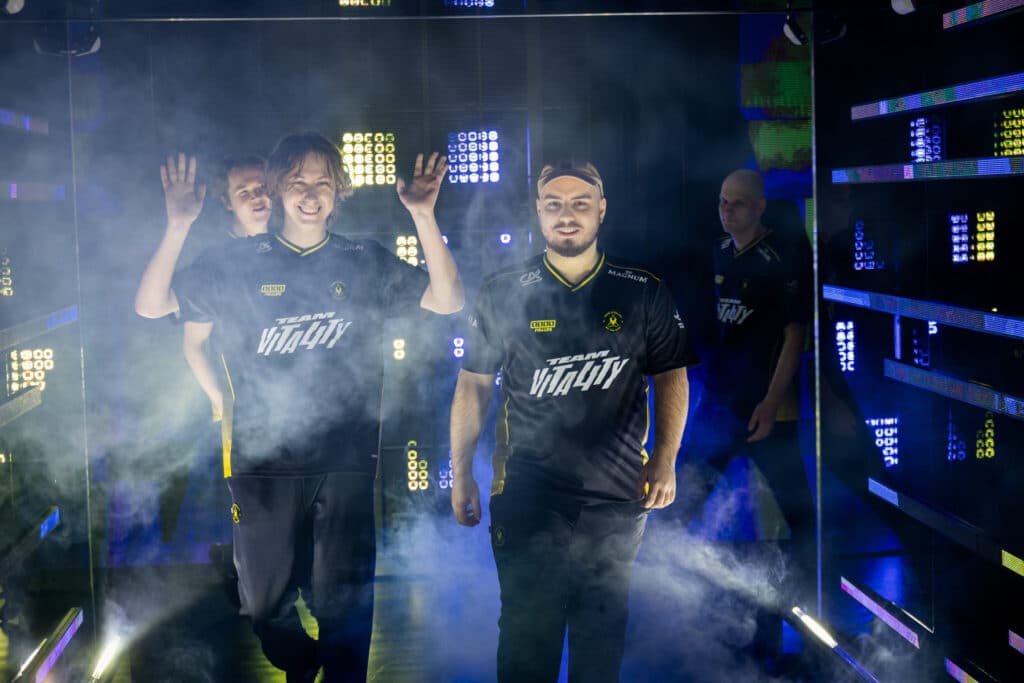
Before the start of the 2026 VCT season, Fnatic was faced with the impossible challenge of finding a replacement for Timofey “Chronicle” Khromov, one of the roster’s longest-standing members and one of the most accomplished professional players in the history of VALORANT Esports.
Like former Fnatic member Nikita “Derke” Sirmitev one year prior, Chronicle made the decision to switch to Team Vitality. Fnatic chose former Gentle Mates player Sylvain “Veqaj” Pattyn to fill Chronicle’s shoes. Veqaj was a bit of an unknown variable to many Fnatic fans but left a positive impression during the organization’s off-season event with INZONE.
VCT EMEA Kickoff: Wrong meta read
In VCT Kickoff’s new triple-elimination format, Fnatic dropped down to the middle bracket right after its first series against BBL Esports. Already then, the squad showed concerning signs of not adapting to VALORANT’s new fast-paced and micro-focused meta. Instead, Fnatic stuck to its favorite slow-paced, default-heavy playstyle.
This trend continued throughout the remainder of Kickoff. Despite surviving in the middle bracket with close matches and incredible pop-off performances from individual players, it became clear that Fnatic had missed the mark with its initial read of the meta. Now, the roster found itself playing catch-up and scrambling to implement double-duelist team compositions mid-competition.
The squad tried to introduce faster plays into its playbook, but these often didn’t look refined in official matches. Similarly, Fnatic drew criticism for not putting one of its star players, Emir “Alfajer” Beder, on duelist or Chamber on some maps.
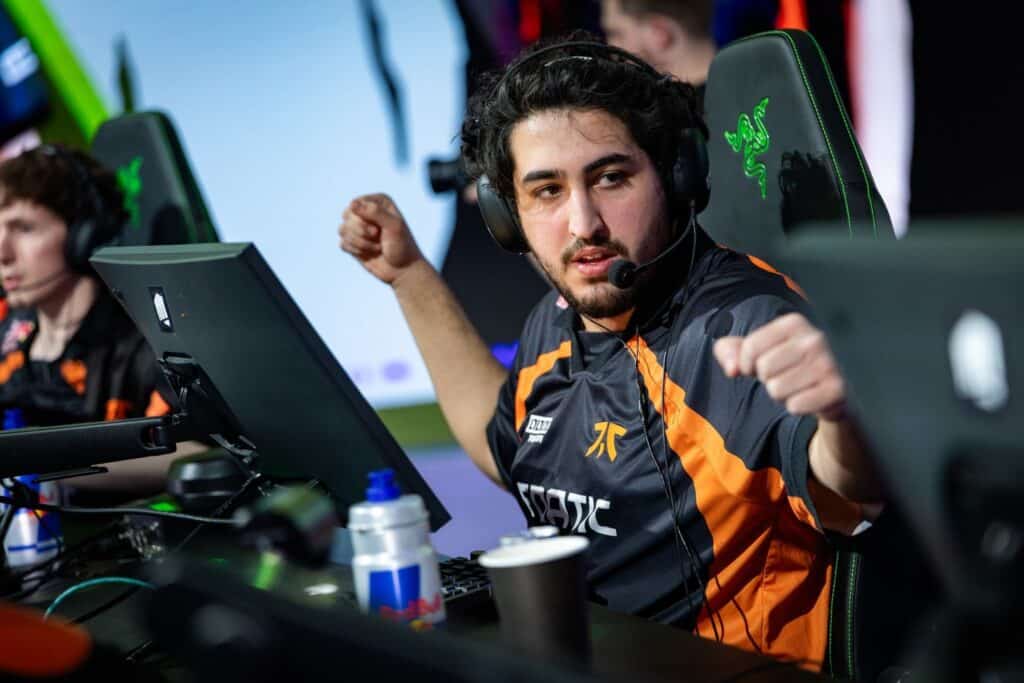
Speaking of maps, Fnatic didn’t seem to have a comfort map throughout Kickoff, with Corrode looking especially shaky. This weakness was exploited by Team Liquid in the Lower Bracket Final by overwhelming Fnatic on Corrode with a new curveball team composition. Fnatic had previously lost a tight Middle Bracket Final to Gentle Mates (2-3) and then bummed out against Team Liquid (0-3).
“The Lower Bracket one I’m not as surprised by in a weird way. […] when I think about Fnatic in terms of endurance, I always think that because they put so much hard work in, I feel like they’re more susceptible. And because the expectations are so high, they’re naturally more susceptible to this kind of thing,” said former Fnatic coach Jacob “mini” Harris on Plat Chat.
“I think it’s better to be the team that isn’t expected [to win] or better to be the team that doesn’t actually put in as much work, and just turns on a day and just shoots.”
Still, the community sentiment after Fnatic’s back-to-back losses in the Kickoff Finals stayed hopeful. After all, the team has a history of underperforming at Kickoff and having to “scale” into each VCT season.
VCT EMEA Stage 1: Brutal Playoffs Awakening
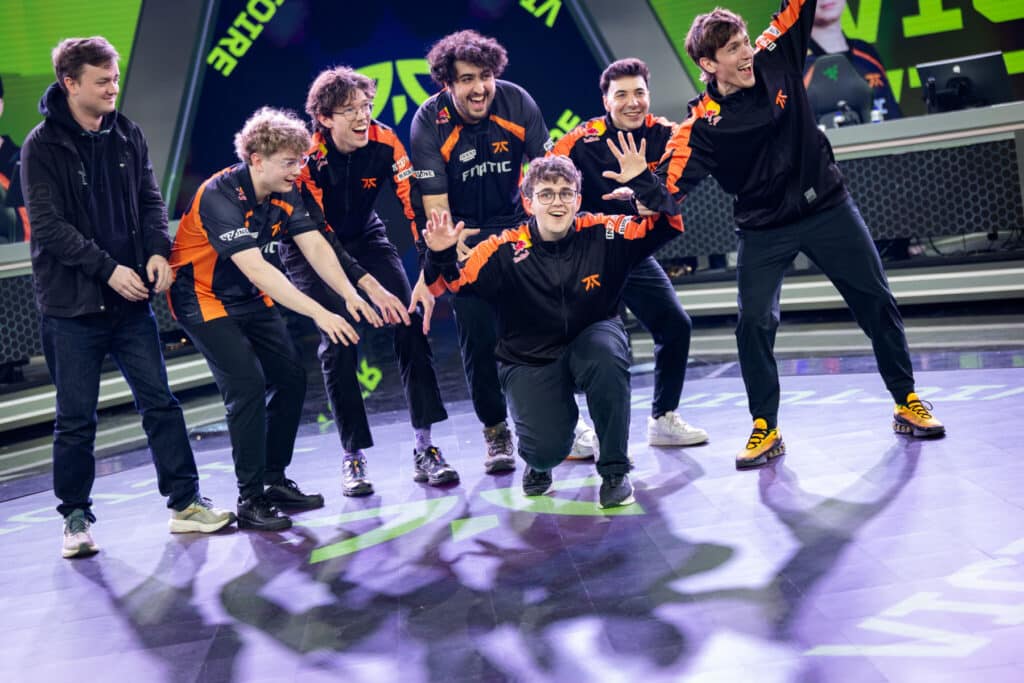
Fnatic started with an incredible 5-0 win streak in VCT EMEA Stage 1. But after securing the first seed in its group during the Group Stage, the squad was swiftly eliminated from the Playoffs due to two consecutive losses. How did that happen?
One way of viewing it is that Fnatic’s dominant start to the stage created a somewhat “inflated” image of the team’s power level. Many considered Fnatic the best team in EMEA and guaranteed to secure its spot at the second global VCT event of the season, Masters London. And when the team kept winning games despite playing with its Assistant Coach Casper “Desmo” Rasmussen and later with Clément “CyvOph” Millard as last-minute substitutes for Veqaj, Fnatic looked simply unstoppable.
Under this shining surface, however, signs of weakness had been brewing for quite some time. Yes, Fnatic was on top of the Neon-Waylay meta, but the squad failed to recognize the value of Vyse over more traditional Sentinels.
“I do think there’s now very easily a narrative that Fnatic haven’t been ahead of almost any meta for a long time now,” explained mini on Plat Chat. “Like, what is a ‘Fnatic comp’ nowadays? I can’t remember the last time someone would be like, ‘Oh, they’re using the Fnatic comp.’”
Furthermore, the team’s map pool seemed to be an issue once again, with Fnatic losing its own map picks towards the end of the stage. Ultimately, the roster hadn’t been properly challenged throughout the Group Stage. In the high-stakes environment of the Playoffs, its weaknesses were exploited, and unexpected player substitutions mid-competition eventually caught up with the squad.
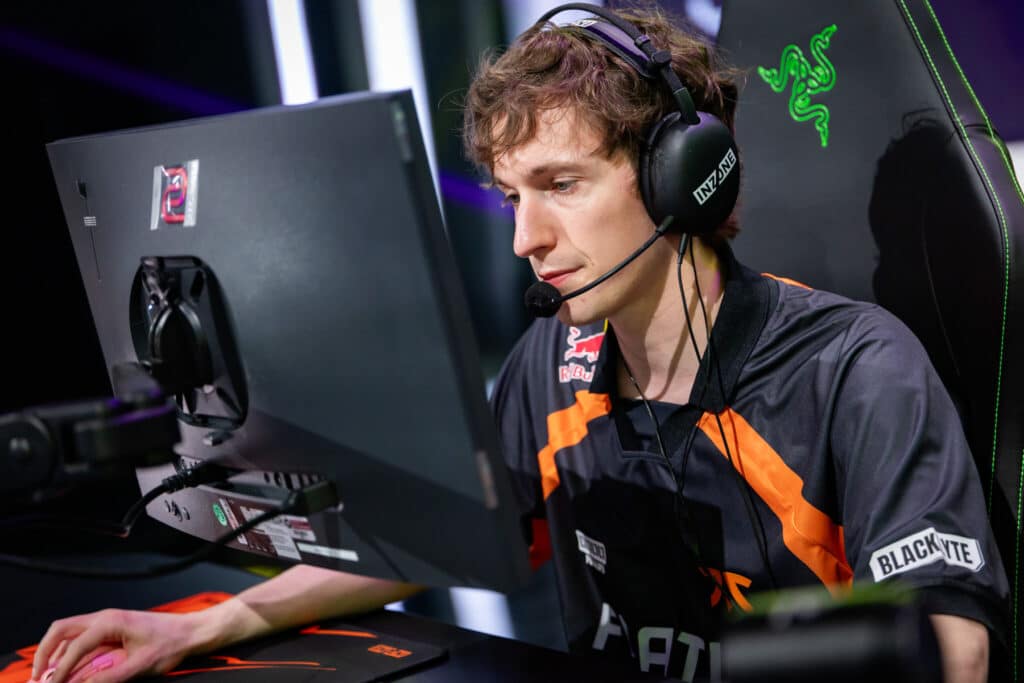
With Fnatic missing back-to-back global VCT events for the first time in history, concerns rose about the weight of expectations on the team. This sentiment was echoed by a heart-breaking interview with Fnatic’s in-game leader (IGL) Boaster conducted by independent journalist Pedro Romero.
“I think just last year for me, the three lost finals, and like I still get sad thinking about it. I haven’t really […] come to terms with it, yeah, recovered from it,” shared Boaster after the Stage 1 elimination. “And I think I’m having so many mental fights with myself. Not even that bad, really, but it’s just like after game losses and stuff, I just feel like it’s just honestly just my fault all the time.”
He later added: “Maybe my time… No, I don’t think it’s up up, but I don’t know. I just wish I was better.”
VCT EMEA Stage 2: Overcomplication
At this point, Fnatic was unlikely to qualify for VALORANT Champions via VCT Points, meaning that a top-2 finish in EMEA Stage 2 was the squad’s best bet.
In this high-pressure phase of the season, the team surprised the VALORANT community with two roster moves: Former Head Coach Milan “Milan” de Meij was dropped for Karmine Corp’s Andrey “Engh” Sholokhov, while CyvOph was replaced by GIANTX’s former IGL Kirill “Cloud” Nekhozhin.
Although some analysts were concerned about the short-term effectiveness of these changes and potential role issues within the roster, Engh was seen as someone who could provide Fnatic with much-needed fast set executes.
Instead, though, Fnatic couldn’t fully bid farewell to its slow and methodical calling style in Stage 2 whilst simultaneously attempting to pull off double-duelist team compositions. In addition, map pool issues persisted throughout the stage. Fnatic’s map theory was lackluster across Sunset, Summit, Ascent, and Breeze.
What also didn’t help was that one of the best fraggers on the roster, Kajetan “kaajak” Haremski, had uncharacteristically weak performances in Stage 2. By now, Fnatic looked like it was crumbling, reaching its arguable lowest point during the 0-13 loss on Ascent versus Team Heretics.
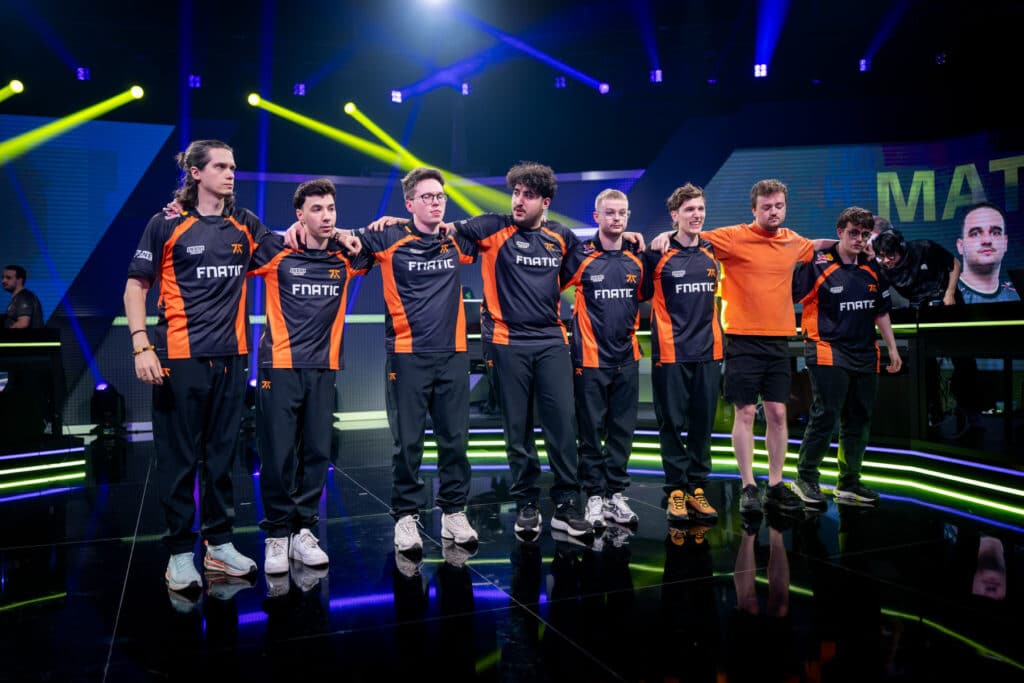
For the Play-Ins, the squad tried to fix many of its weaknesses through role and strat adjustments. However, the myriad of changes pushed Boaster to micro-manage his team, making Fnatic easily overwhelmed by confident, fast-paced opponents.
“I think Boaster has a higher standard than what is allowed in this meta,” is how mini summarized Boaster’s IGLing struggles on Plat Chat.
In the end, Fnatic fell to the Challenger team Joblife in the Play-Ins lower bracket. Analyst and content creator Thinking Man’s Valorant described Fnatic’s core problem as follows: “This is the thing I think that is consistent with Fnatic and why they’re struggling so much is because any time their opponents do anything unexpected, they seem to just not know how to react.”
And now the future is even more unexpected than ever, for Fnatic, its players, and its fans.